
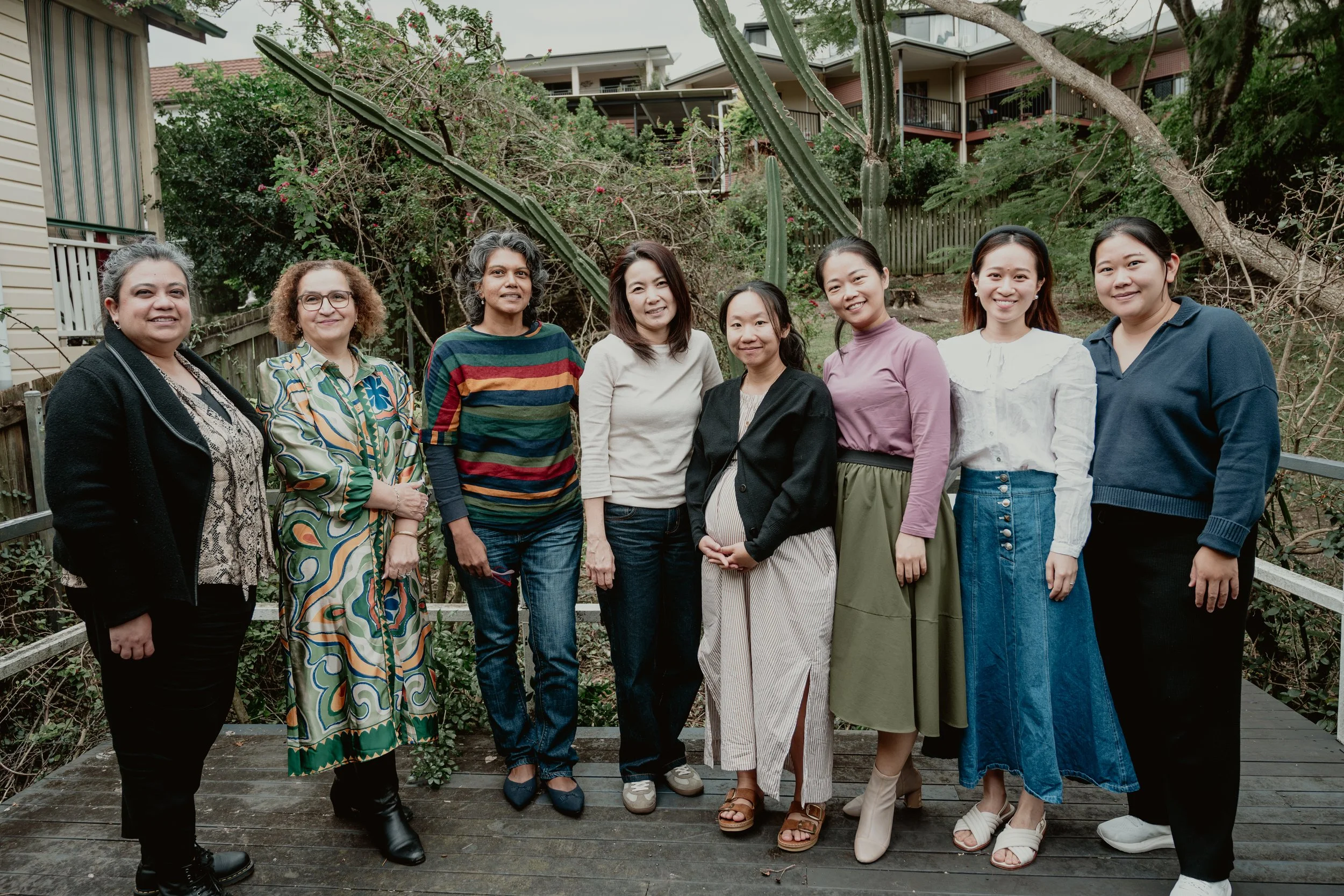
Understanding Domestic, Family and Sexual Violence in Culturally And Linguistically Diverse (CALD) Communities in Queensland
Domestic, family and sexual violence are patterns of behaviour used to control, isolate or frighten another person. For migrant and refugee women, violence can be complicated by language barriers, visa insecurity, social isolation and community pressures.
IWSS provides trauma informed, culturally safe support to help women, children and young people recognise abuse, understand their rights and increase their safety.
What is Domestic, Family and sexual Violence?
Domestic Violence is about power and control and involves behaviour which makes you feel fearful and isolated.
Family Violence refers to threatening, coercive or abusive behaviour occurring in family or intimate relationships.
Domestic and Family Violence includes one or more of the following types of behaviour and can include threats and/or actual acts of violence such as:
-
Physical abuse
Physical abuse may include pushing; shoving; hitting; punching; strangulation; kicking; throwing objects; driving dangerously to frighten you; or making threats to physically harm you, your children or your pets. Physical abuse may also include behaviour that threatens your physical wellbeing, for example, denying you or your children access to medical attention or restricting the provision of adequate food and/or water.
-
Verbal abuse
Verbal abuse may include swearing or use of offensive language; constant criticism and ridicule; and making derogative comments. Verbal abuse may also include spreading rumours or false information about you to your friends, family or colleagues.
-
Emotional abuse
Emotional abuse is any behaviour used to create feelings of distress, fear, anxiety, confusion, and/or helplessness. Examples include: constantly criticising or belittling your actions and abilities; or making threats to have you deported from Australia, to leave you or to stop you from seeing your children or threatening to commit suicide.
-
Sexual abuse
Sexual abuse is any form of sexual contact or behaviour that is forced or unwanted. This might include: touching, kissing, oral sex, vaginal or anal intercourse, viewing pornography, or any other sexual act that is not wanted. Sexual abuse may occur within marriage – that is sex without your freely given consent. Consent is not seen to be freely or voluntarily given if you are forced, threatened, intimidated or coerced to have sex with your partner; or if you are afraid that you will be harmed if you do not have sex with your partner.
Sexual abuse can also happen in other contexts, for example at workplace, act of abuse by non-intimate partner.
-
Economic abuse
Economic abuse may include denying you access to the money you earn or are entitled to; not providing adequate income for you and/or your children’s personal needs; constant surveillance and monitoring of every purchase you make or threats to withdraw financial support.
-
Social abuse
Social abuse may include attempts to restrict or limit your contact with family or friends; constant surveillance and monitoring of your telephone calls; and stalking.
-
Cultural and spiritual abuse
Cultural and spiritual abuse includes behaviours that demonstrate a lack of regard and respect for your cultural and/or spiritual beliefs, values and practices. Examples include: constantly criticising or belittling your cultural and/or spiritual beliefs, values and practices; prohibiting conversations in your first or preferred languages; restricting you from dressing in culturally appropriate garments; or denying you access to attend cultural or religious events.
-
Damage to property
Damage to property includes damage to the house, household, furniture or anything else that you own or use. Examples include: breaking a plate, punching a hole in the wall, or scratching your car.
Who Can Experience Domestic and Family Violence?
Violence can occur in:
• intimate partner relationships
• family relationships
• informal care relationships
Myths and Facts about Domestic and Family Violence
-
MYTH • Violence against women is accepted in some cultures
FACT • Violence against women is common in all cultures, races, and societies.
The fact that it may be a common occurrence does not lessen the suffering and damage it causes to the woman, the family and the society, nor does it lessen its significance as a crime.
Violence against women, including sexual violence, is a breach of human rights.
-
MYTH • Women from some cultures are more passive and submissive, that is why they are more likely to become victims of violence.
FACT • Women may be relegated to specific roles and they may be repressed by state or religious laws, but this does not mean they are themselves passive or submissive.
Violence against women is a social construction that reflects and reinforces the unequal distribution of power between men and women in society generally.
Being passive and submissive does not invite violence or give anyone the right to perpetrate violence against them.
-
MYTH • Cultural traditions must be respected and remain unchallenged.
FACT • A woman's basic human rights must be upheld regardless of cultural values and traditions.
Violence must be challenged and discussed at every opportunity with the woman.
Promoting discussion with the woman about her cultural traditions allows women to think and reconsider traditional cultural norms that foster violence towards women and children.
-
MYTH • Women from that culture are more passive and submissive that is why they are more likely to become victims of violence.
FACT • Violence is a social construction that generally places men in positions of power and designates women as subordinate.
Being passive and submissive does not invite violence.
-
MYTH • Domestic and sexual violence against women does not happen in our community.
FACT • Secrecy and silence are part of the violence perpetrated against women. Women's experiences of violence are minimised, dismissed and disbelieved by the community.
There may be a tendency to justify violence as part of the cultural norms within that community.
-
MYTH • Women’s refuges are not culturally appropriate.
FACT • This myth discourages women from leaving violent relationships.
Although cultural inappropriateness may be the case, the priority is for the woman and her children to feel safe.
Information about refuges and options for safe accommodation must be given to the woman for her to make an informed choice.
-
MYTH • Conciliation and marriage counselling are the most culturally appropriate forms of intervention.
FACT • Perpetrator and victim are held equally responsible for the violence.
This myth also negates power imbalances in the relationship for the woman.
Although conciliation and marriage counselling may be options women wish to take, the options must encompass both parties. However, often women are given or expected to take greater responsibility for keeping the relationship together.
-
MYTH • Our culture allows force to be used as a means of disciplining women.
FACT • A woman's behaviour is seen as a cause of violence and their views and opinions are not considered. Violence is condoned. This myth does not acknowledge that this cultural value reinforces the power disparity between men and women.
-
MYTH • Cultural traditions must be respected and remain unchallenged.
FACT • Violence must be challenged and discussed at every opportunity with the woman; not doing so disregards the woman's basic human rights.
Promoting discussion with the woman about her cultural traditions would allow women to think and re-consider traditional cultural norms that foster violence towards women and children
-
MYTH • All women from the same cultural background have the same values and beliefs.
FACT • This myth negates the differences between individuals within a community.
In addition political, social, educational and geographical influences also inform the values and beliefs of people. This myth tends to create stereotypes of women.
-
MYTH • Their religion tells them it is okay for a husband to assert his sexual needs and that a woman is there to satisfy the sexual needs of her husband.
FACT • All religions and religious texts discuss sexuality, marriage, and the duties of husbands and wives. However, all religions and religious texts also speak of the importance of respect and honour between men and women, and husbands and wives.
For a man to treat a woman without honoring and respecting her needs is to reinterpret religious texts out of context and from a self-interested viewpoint.
No religious text (Christian, Islamic, Buddhist, Jewish, Hindu) either advocates or provides for the sexual abuse of women, even when they are wives.
-
MYTH • Women in that culture believe they are there to service the needs of their husbands. Therefore rape in marriage cannot occur.
FACT • Women also have their own needs. Many women and men are not aware that rape in marriage is a crime in the same way that rape anywhere is a crime.
The law applies to all people in Australia regardless of their ethnic background.
-
MYTH • The promotion of women’s rights endangers the social stability of communities.
FACT • Breaking the silence and secrecy of violence transforms responsibility for the issue into a community responsibility.
Perpetrators of violence are threatened by public discussion and acknowledgement of the human rights of women and children and their rights to safety.
Stopping violence in a community can only strengthen its social fabric and stability.